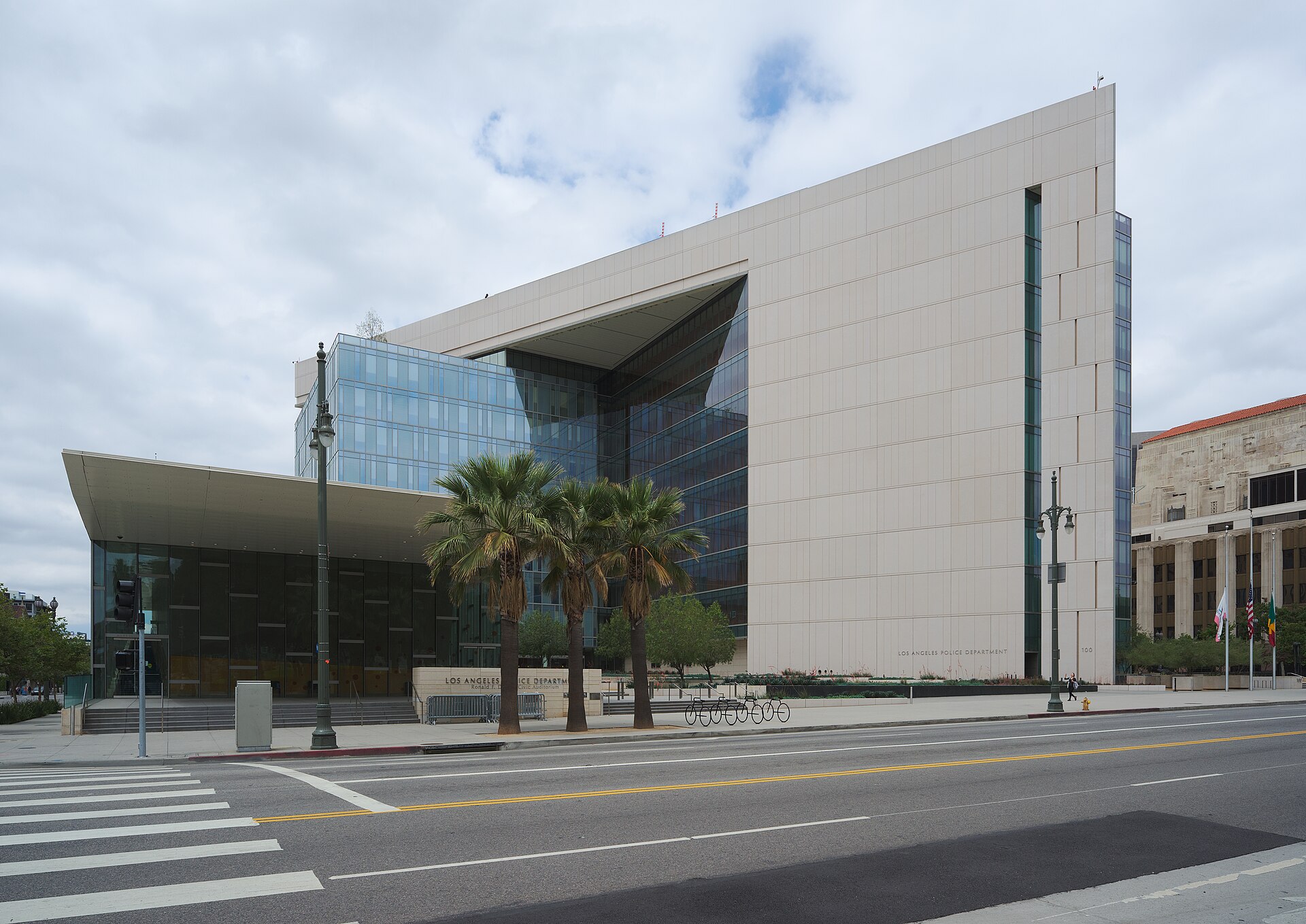

“We’re down 1,300 police officers,” Los Angeles Police Chief Jim McDonnell told the City Council’s budget committee last December. “We’re bleeding out.”
The FBI’s count for 2025 puts the LAPD at 8,663 sworn officers for a city of about 3.87 million people. That works out to 2.24 officers for every 1,000 residents, which ranks LA 34th among the 76 city police departments in the country with at least 500 officers. Forty-two of them have fewer officers per resident than LA does.
Los Angeles lands a little above the middle of the list, which falls between Denver at 2.13 and Indianapolis at 2.02. Averaged across all 76 departments, the figure is 2.26, almost exactly where LA sits.


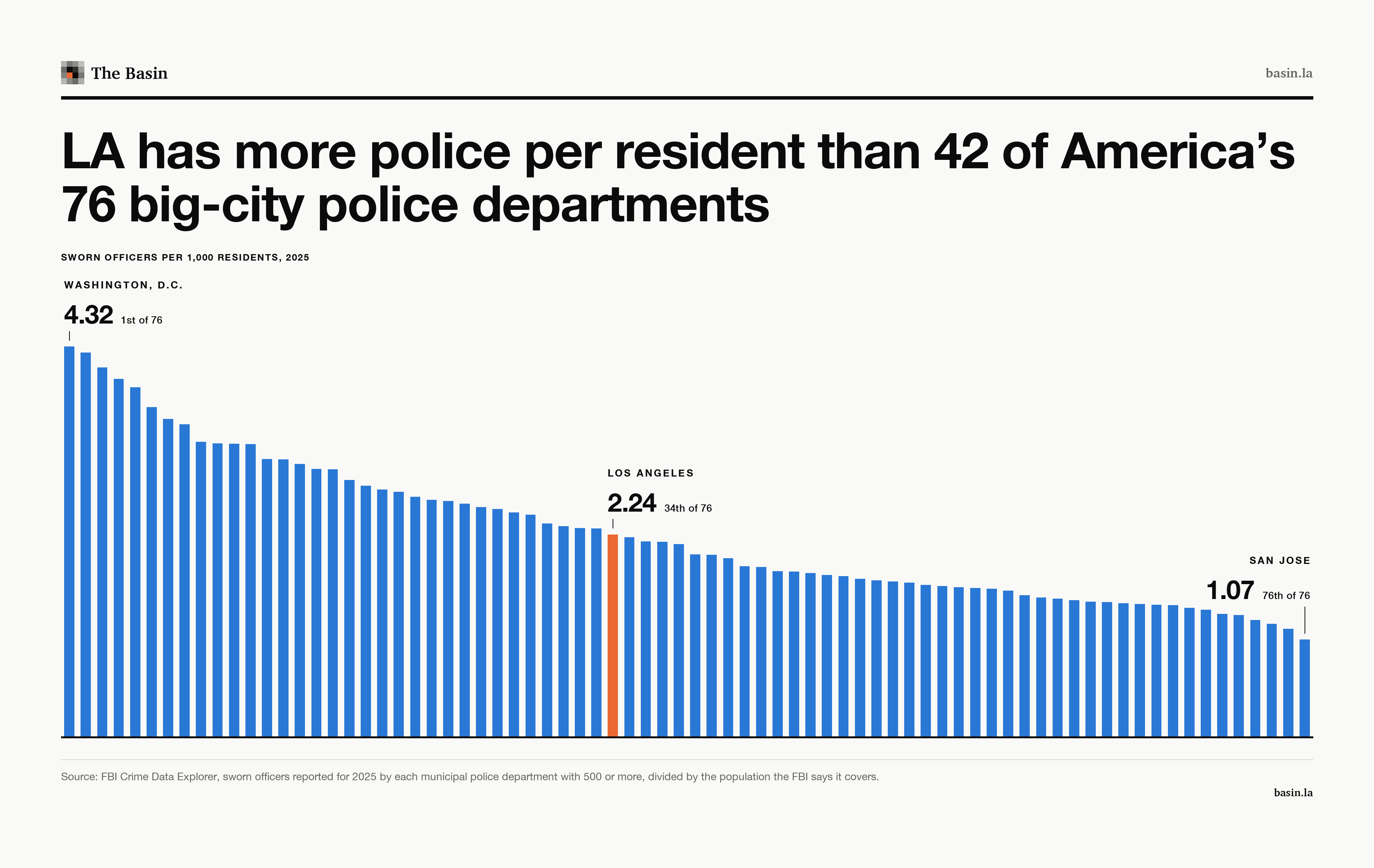
Washington, D.C., tops the list with 4.32 officers per 1,000 residents, followed by Chicago at 4.25, Detroit at 4.08 and New York at 3.96. If Los Angeles were policed at New York’s rate, the LAPD would have about 15,300 officers, roughly 6,700 more than it has now, and matching D.C. would take about 16,700. McDonnell has put the number the city needs at 12,000, LA Magazine reported in September, which would come to 3.10 officers per 1,000 residents and move LA up to 13th, between Boston and Cincinnati. Fifth place goes to Birmingham, Alabama, which has 755 officers for about 195,000 people and more of them per resident than Baltimore or Philadelphia.
Seven of the ten thinnest departments in the country are on the West Coast, and five of those are in California. San Jose is last at 1.07 officers per 1,000 residents, about a quarter of D.C.’s rate, with Sacramento, San Diego, Portland and Seattle next up the list. Of the eight California departments big enough to make the list, only San Francisco, at 2.31, has more officers per resident than LA. If Los Angeles were staffed like San Jose, the LAPD would have about 4,150 officers, fewer than half of what it has.
The LAPD peaked at 10,002 officers in 2019, when it ranked 31st. It now has 1,339 fewer, a drop of 13%, while the population it covers fell about 3.5%. Most big departments thinned out over the same years, and only 20 of the 75 with numbers for 2019 have more officers per resident now than they did then, so losing more than a thousand officers only cost LA three places.


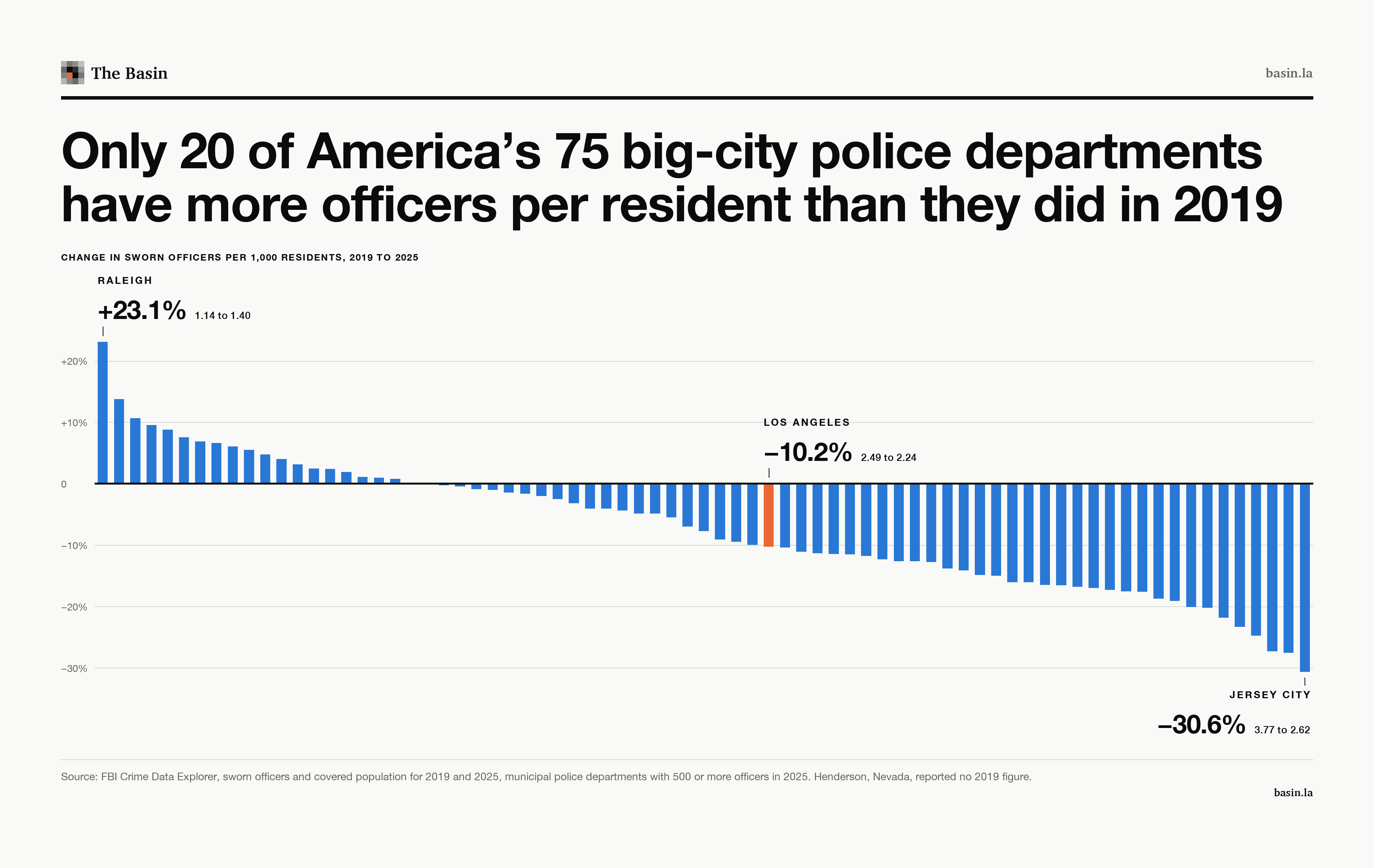
D.C. has lost 832 officers since 2015, more than a fifth of its force, and it’s still first. San Jose added 126 officers over the same decade and stayed at the bottom, because it started out further behind, with 0.91 officers per 1,000 residents in 2015. Detroit has more officers than it did in 2019 and fewer residents, which lifted it from 10th place to third.
Las Vegas is the oddest case on the list, because its Metropolitan Police Department patrols unincorporated Clark County as well as the city, including most of the Strip, so the FBI counts it as policing 1.71 million people and ranks it 42nd. Measured against the roughly 680,000 people who live in the city of Las Vegas, its 3,226 officers would come to 4.75 per 1,000, more than any other department on the list.
These figures divide each department’s sworn officer count as reported to the FBI for 2025 by the population the FBI says that department covers. The counts cover sworn officers in every assignment, from patrol to desk jobs, and leave out civilian employees. Using Census city populations instead moves LA one place, to 35th, and drops five consolidated city-county departments, including Nashville’s and Louisville’s, that don’t match a single Census city. Sheriff’s departments that police big cities, such as Jacksonville’s, aren’t on the list because the FBI classifies them as county agencies.