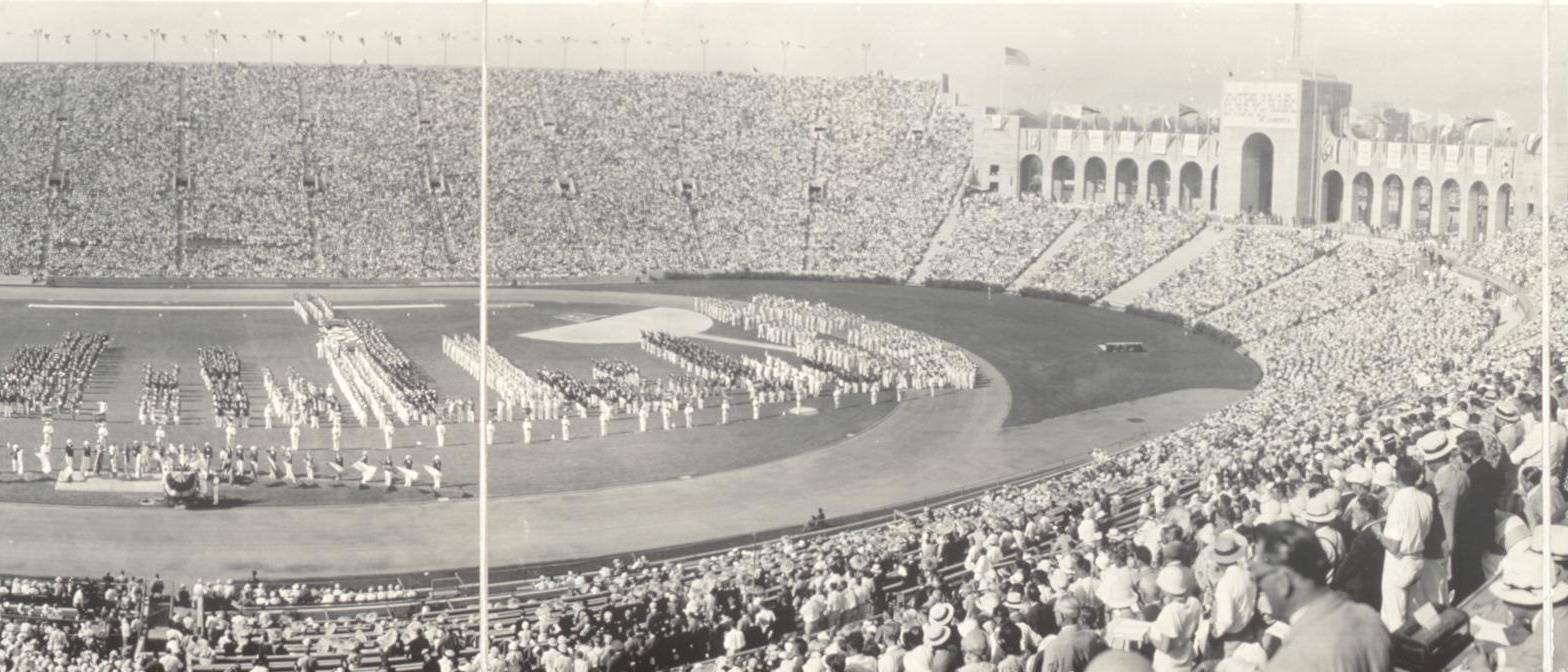

In 1932, a ticket to the Olympic opening ceremony in Los Angeles cost $3.00. Everyone paid the same. No tiers, no categories, no luxury boxes. We know this because the 1932 Organizing committee's books are easier to understand than today's. The 1932 Games sold 75,648 tickets banking $226,944. Today, that would be $5,589,830.96.
For the 2028 opening ceremony, in the same stadium, the range runs from a low of $329 up to $5,519 before the 24 percent service fee bumps the ceiling up to $6,844.
Adjusting for inflation, that $3.00 ticket was worth about $74 in today's money. The 2028 equivalent is about $5,684. The best seat at an LA Olympic opening ceremony has gone up 77 times over in real terms, in the same building, across 96 years.
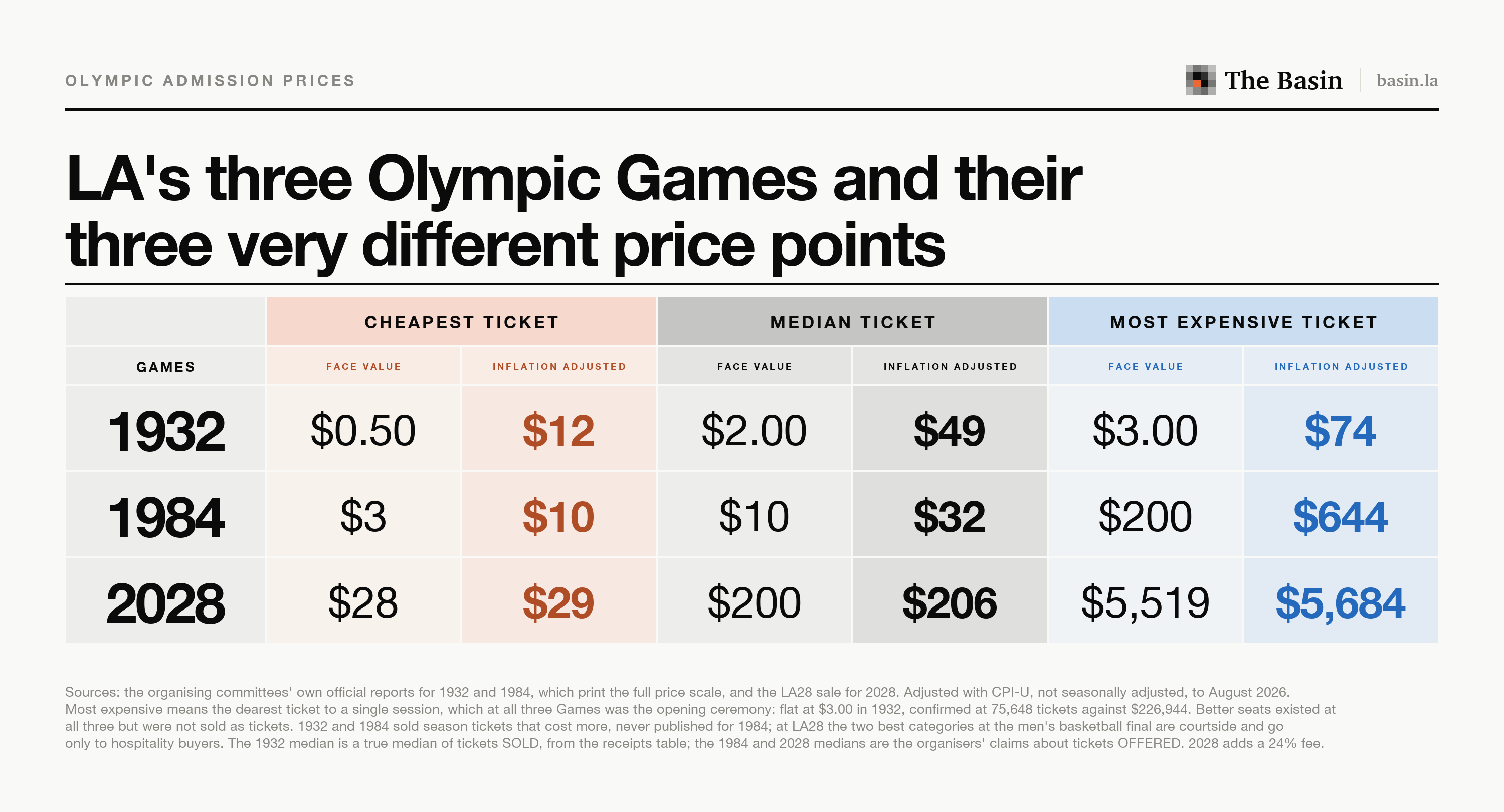
In 2026 dollars, the cheapest ticket at an LA Olympics has gone from about $12 in 1932 to $29 in 2028, the median ticket from $49 to $206, and the best opening ceremony seat from $74 to $5,684.
The cheap seat tells a completely different story.
The floor held
In 1932 the cheapest adult ticket at the Games was 50 cents, about $12 today. In 2028 it's $28, about $29. That's a 2.3 times increase over almost a century, which is frankly far less than I expected. However today's $28 tickets are far worse and much harder to come by, comprising only a tenth of total tickets.
The 50-cent ticket bought more. It got you into the Coliseum for the morning session of athletics. It covered morning wrestling, afternoon boxing or weightlifting. Several events cost nothing at all, including the yachting (today called sailing), the shooting, the 50-kilometer walk and the cycling road race. Beyond that, children under 16 paid 50 cents for seemingly every event.
On the other end of the spectrum, the $28 LA28 ticket is a qualifying or preliminary session. There are a million of them out of roughly 10.5 million, they're spread very thinly across every sport, and they are specifically not available for the finals of track and field, swimming, artistic gymnastics or basketball. Half of these tickets were claimed in a locals presale in April.
The middle moved
More interesting than the two extremes is the median.
For 1932 we can calculate it. The official report prints tickets sold and receipts for every sport next to a published price list (again, shockingly detailed and easily accessible information given this was nearly a century ago), so the distribution reconstructs easily. The median single-event ticket was $2.00, about $49 today. "Athletics" was a third of every ticket sold, and 99.3 percent of those were the $2.00 afternoon seat.
For 1984 and 2028 we only have what the organizers have said. The 1984 committee reported that about half of its 7.7 million tickets were priced at $10 or less, which is roughly $32 today. LA28 says nearly half its tickets cost under $200, which is about $206. Those are claims about tickets offered rather than tickets sold, so they aren't the same measurement as the 1932 figure, our presumption is that these are likely undercounting the sale figure since today with the advent of ticket resale companies . Still though, they describe something quite real: the typical ticket is by our approximation about six times more expensive in real terms than it was in 1984.
Now my favorite plot twist:
1984 was cheaper than 1932
On both the cheapest ticket and the median, the 1984 Games undercut the 1932 Games in inflation-adjusted terms. The cheapest seats were about $10 against $12. The middle of the market was about $32 against $49.
That was deliberate. The 1984 committee priced sport tickets from $3 to $95, put roughly half the inventory at $10 or less, and still took $155.9 million at the gate, against about $20 million each for Moscow, Montreal and Munich.
The ceiling in 1984 was $200 for the top tier of the opening and closing ceremonies.
That $200 was the dearest single-session ticket, not the dearest ticket. Both Games also sold season tickets that cost more. LA84's ran to about 10 percent of inventory, priced above the combined face value of the sessions they covered, and were never published. In 1932 an Olympic Stadium Pass covering 25 events cost $22.
One price then, seventeen today
The clearest way to see what changed is to look inside a single event.
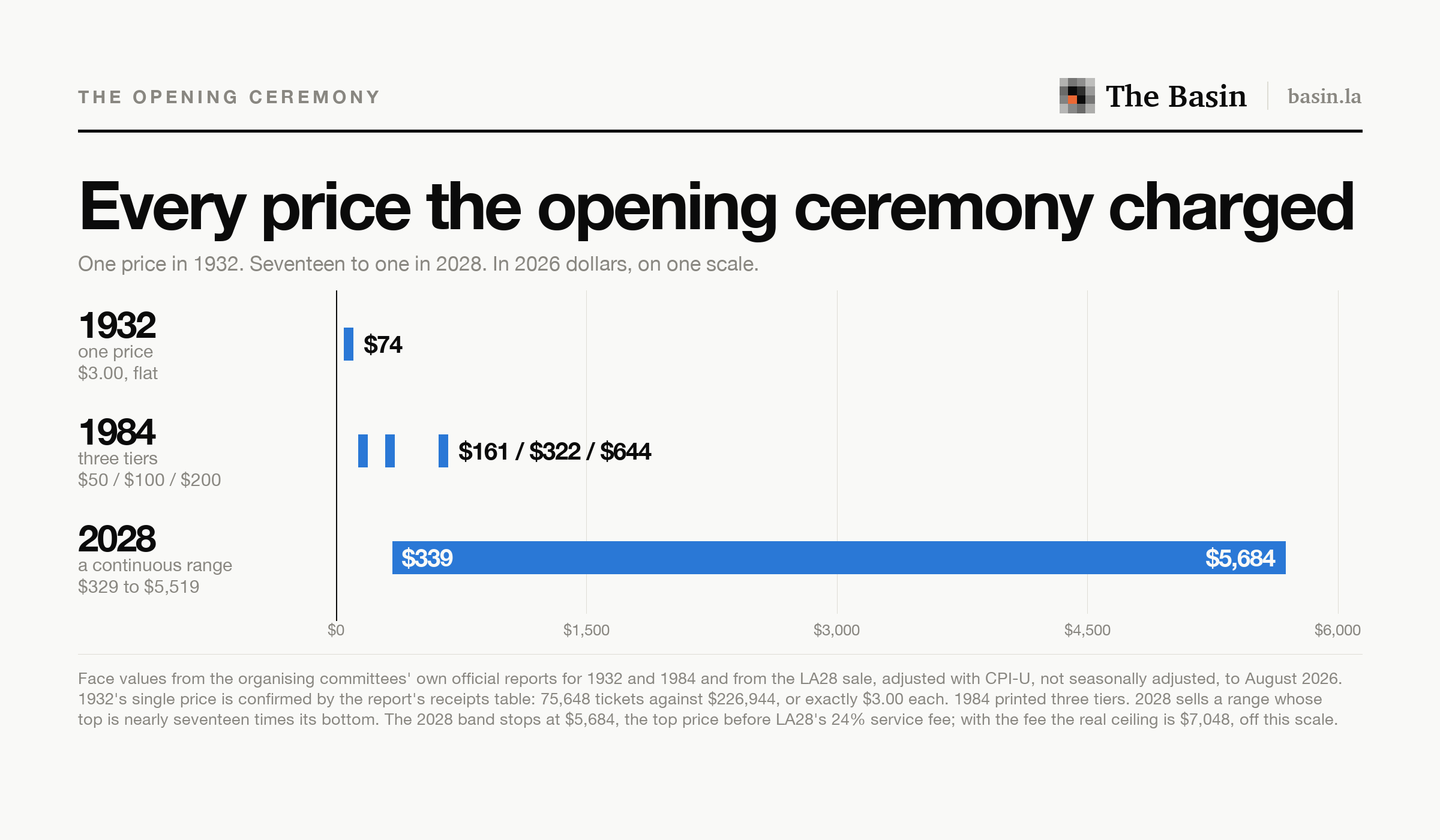
In 1932 the opening ceremony had one price. In 1984 it had three, $50, $100 and $200, a spread of four to one. In 2028 it runs from $329 to $5,519, a spread of nearly seventeen to one, (before the fee). Above that sit hospitality packages, which are a category the earlier Games had no comparable version of.
The Games didn't simply get more expensive. They were hit with a healthy dose of class division.
Methods
Face values come from the organizing committees' own official reports for 1932 and 1984, which print the full price scale, and from the LA28 sale running through 2026. Figures are adjusted with CPI-U, all urban consumers, not seasonally adjusted, to August 2026, the only US price series reaching back to 1932. The multipliers are 24.63 for 1932, 3.22 for 1984 and 1.03 for 2028.
The 1932 median is a true median of tickets sold, rebuilt from the report's receipts table, and it holds under every split those receipts allow. The 1984 and 2028 medians are the organizers' statements about tickets offered. Prices are face value and exclude the 24 percent fee except where noted. LA28 is still selling, so its numbers can move.
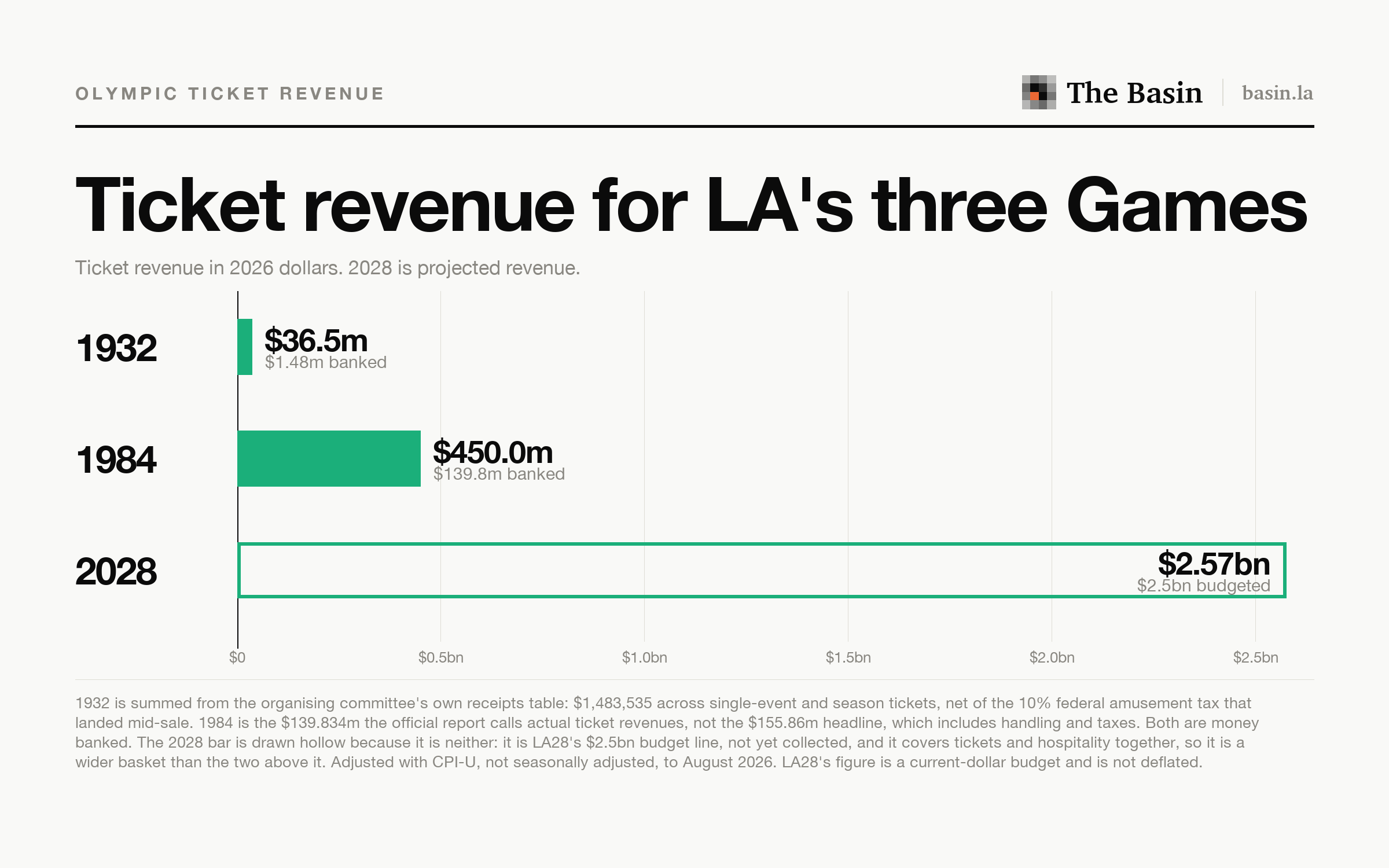
Gate revenue compares money actually banked in 1932 and 1984 against a budget line for 2028. The 1932 total of $1,483,535 is summed from the report's own receipts table across single-event and season tickets. The 1984 figure is the $139.834 million the report calls actual ticket revenues, not the $155.86 million headline, which includes handling and taxes. LA28's $2.5 billion is a target it has not collected, and it covers tickets and hospitality together, so that bar is drawn hollow.