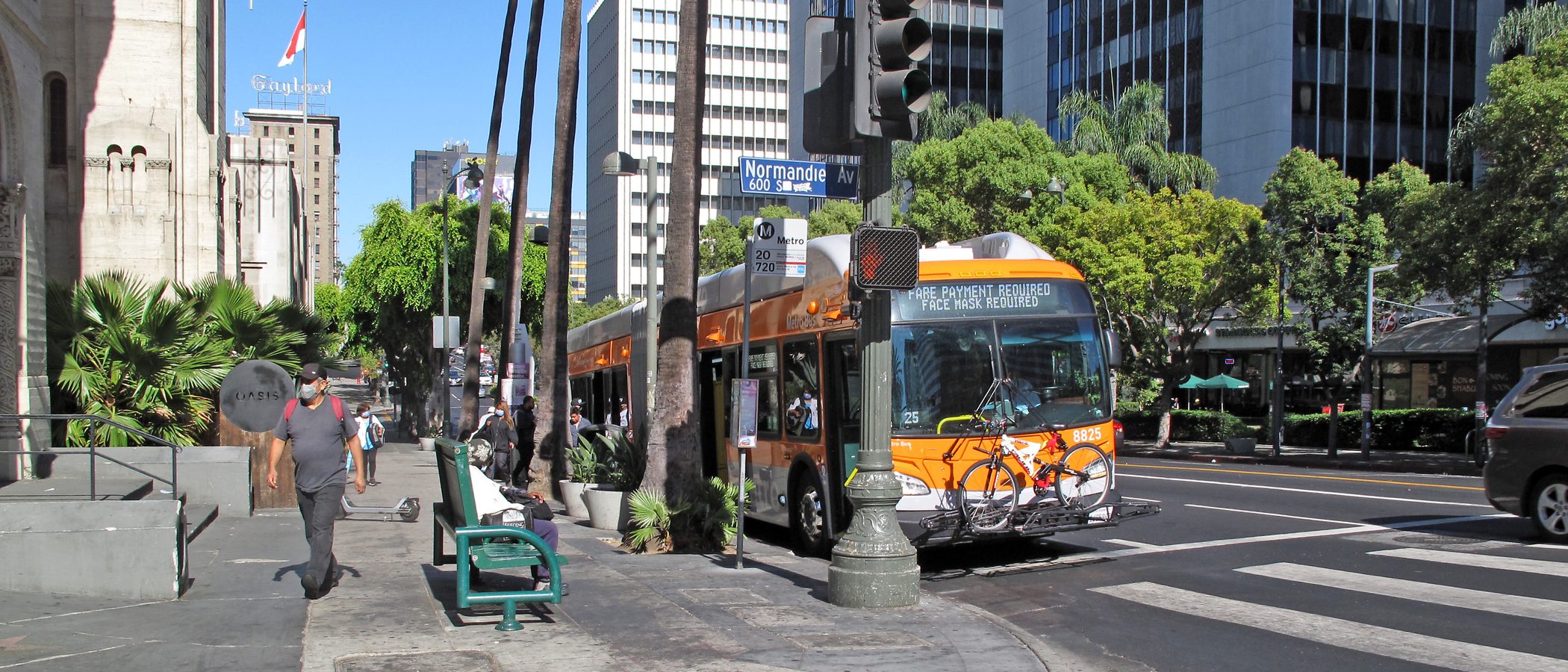

Los Angeles issued $172.6 million in parking fines in the fiscal year that ended in June. Cameras mounted on buses accounted for $42.8 million of that, from 146,184 tickets.
That puts bus lane cameras ahead of street cleaning, the city’s largest source of parking fines in the available records before the camera program began.
The first recorded camera ticket was issued on July 12, 2024. The program issued $16.1 million in fines that fiscal year and $42.8 million the next.
Bus lane cameras have passed street cleaning, the previous biggest source of parking fines
These are the amounts on the tickets. The records used here don’t tell us how much the city collected.
While camera fines grew by $26.7 million between those two years, all other parking fines combined fell by $13.8 million. The records don’t explain the decline. Camera tickets more than made up for it.
Three streets account for most of the tickets
Since the program began, cameras have issued tickets on 28 streets. More than three-quarters came from Wilshire Boulevard, La Brea Avenue and Sixth Street downtown.
Wilshire accounts for 42.3 percent, La Brea for 21.1 percent and Sixth for 13.3 percent. The top five streets together account for 87.7 percent.
The whole program is three streets
We measured the distance between intersections where tickets were recorded, following them in order along each street. They cover about 31 miles across 37 separate stretches.
Los Angeles has 7,469 miles of streets. That puts the program’s estimated footprint at 0.42 percent of the city’s street mileage. Last fiscal year, it accounted for 24.8 percent of parking fines by dollar amount, or roughly $1.4 million for each mile in that footprint.
Wilshire makes up about 9.2 miles. La Brea accounts for 5.8 miles and Sixth Street for 1.4. Since the program began, Sixth has produced roughly 20,000 tickets per mile, about twice Wilshire’s rate.
The gap in tickets along Wilshire is Beverly Hills, which is outside LA’s jurisdiction.
The dots on the map show the 301 intersections where tickets were recorded. The cameras travel on buses, so the distribution depends partly on where equipped buses run. It doesn’t establish that drivers on these streets block bus lanes more often than drivers elsewhere.
Seven in ten tickets are issued during five hours of the day
About 71 percent of camera tickets were issued between 7 and 9 a.m. or between 4 and 7 p.m. The hour from 4 to 5 p.m. alone accounts for a quarter of all tickets.
Seven citations in ten are written in five hours
Weekends account for just 5.3 percent.
The concentration during commuting hours makes sense for a program intended to keep bus lanes clear. It also puts most of the fines on a small set of streets during a few hours each weekday.
Every camera ticket in the dataset carries a $293 fine. That holds across all 218,471 tickets recorded since the program began.
An expired meter ticket is $63. A street cleaning ticket is $73. One camera ticket costs slightly more than four street cleaning tickets.
The recorded amount is the same regardless of how long a car was stopped or how many buses it blocked.
Cars blocking bus lanes force buses to pull into traffic. Keeping those lanes clear gives the city a reason to enforce them, particularly on Wilshire during rush hour.
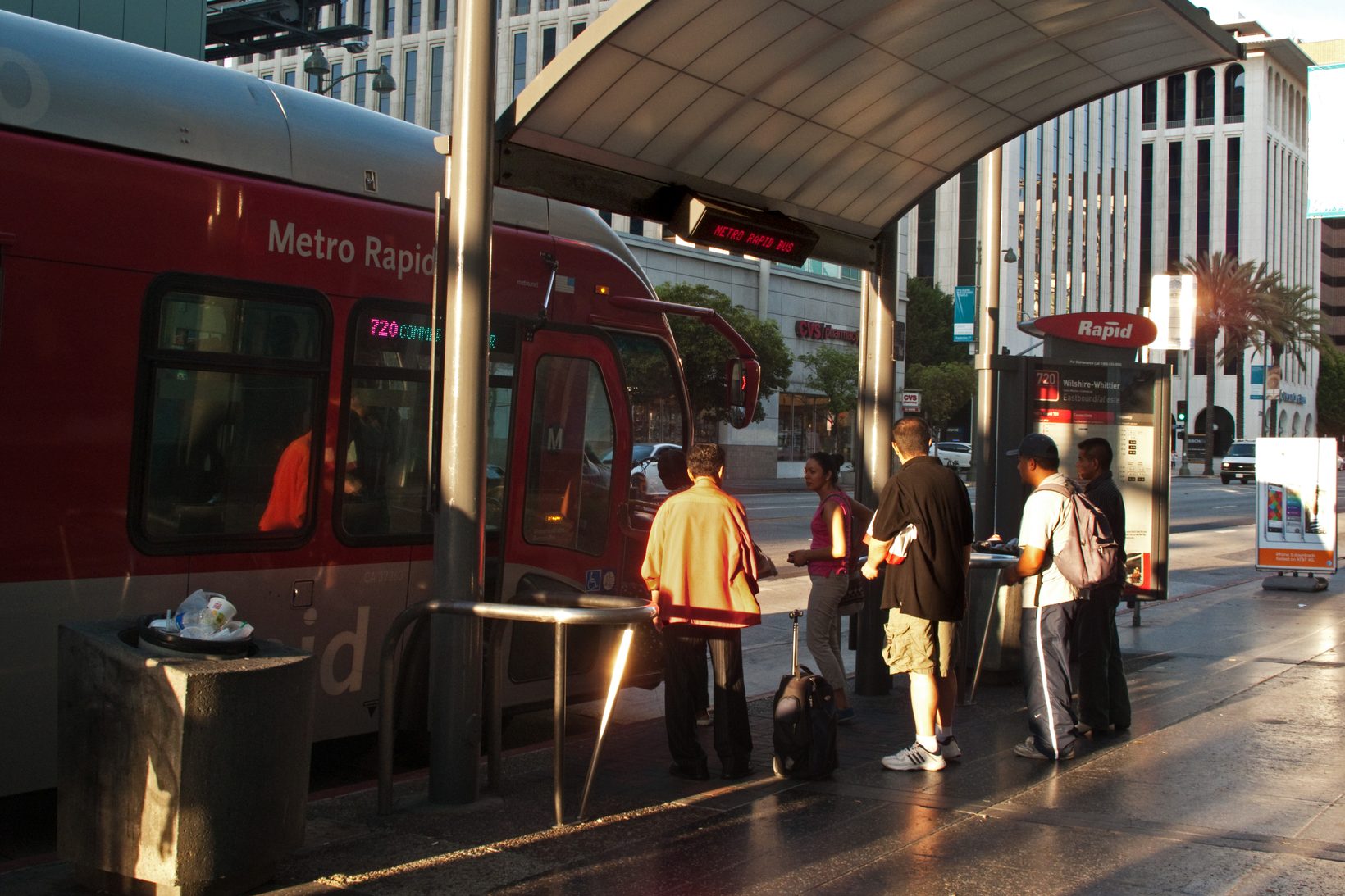

The cameras have also become a large source of fines very quickly. In their second fiscal year, they issued more than any other category of parking enforcement in Los Angeles: nearly one dollar in four.
Sources and method
We used the City of Los Angeles parking citation records published by the Department of Transportation. Annual totals follow the city’s fiscal year. FY2026 covers July 2025 through June 2026.
The street shares, hourly figures and total of 218,471 tickets cover the period since the first recorded camera citation on July 12, 2024.
We identified camera tickets by the violations “EXCLUSIVE FOR BUSES” and “PK IN BUS ZONE,” combined with a direction prefix in the location field. We excluded older bus zone tickets issued by officers.
All dollar amounts are fines issued. They do not measure payments collected.
The 31-mile estimate measures the distances between intersections where citations were recorded. It is an estimate of the program’s footprint based on ticket locations. Some records place coordinates several kilometers from the named street, so we used the median recorded coordinates for each intersection.